

Dzhokhar Dudayev, Anna Politkovskaya, Boris Nemtsov, Alexei Navalny: what they said about Russia, what came true and what happened to them. And what those who do not believe in the empire’s collapse have to say about it.
Carthage
In the spring of 1995 Dzhokhar Dudayev, president of the self-proclaimed Chechen Republic of Ichkeria, gave an interview to the programme “Vzglyad”; the recording is an hour and a half long. Russia’s war in Chechnya had by then been going on for about six months. In the last quarter of the interview he listed empires that had vanished, among them those of Tamerlane, Byzantium and the Ottomans. “The Russian empire must disappear in the same way,” he said (video 1:12:08).
Less than two minutes later came the phrase that Ukraine’s 5 Kanal circulated as a separate clip in 2024 (5 Kanal, 21 April 2024): “Russia today is a Carthage that must be destroyed. Or it must become a democratic state governed by law — even if there is not a whiff of democracy there, then at least one that respects laws and rights. Or this state must disappear from the map of history. There is no middle way.” (1:13:56)
Less than a year later Dudayev was dead. This article is about four people who, in different years and in very different words, said much the same thing: a Russia like this cannot exist without war and without lies. All four are dead. Whether they were right about the end of the empire is a separate question — and at the end of the article it is also answered by those who disagree.
Why these four. This is not a complete list. Many more critics and journalists have been killed or have died in unexplained circumstances during Putin’s rule (see the table in the section “A pattern, not an exception”). These four were chosen because each left a public, verifiable text about the nature of power in Russia. Three of the four deaths have been assessed by courts or governments. Dudayev was killed in 1996, while Yeltsin was still in power, and his death is documented in media sources.
Dzhokhar Dudayev (1944–1996): “There is no middle way”
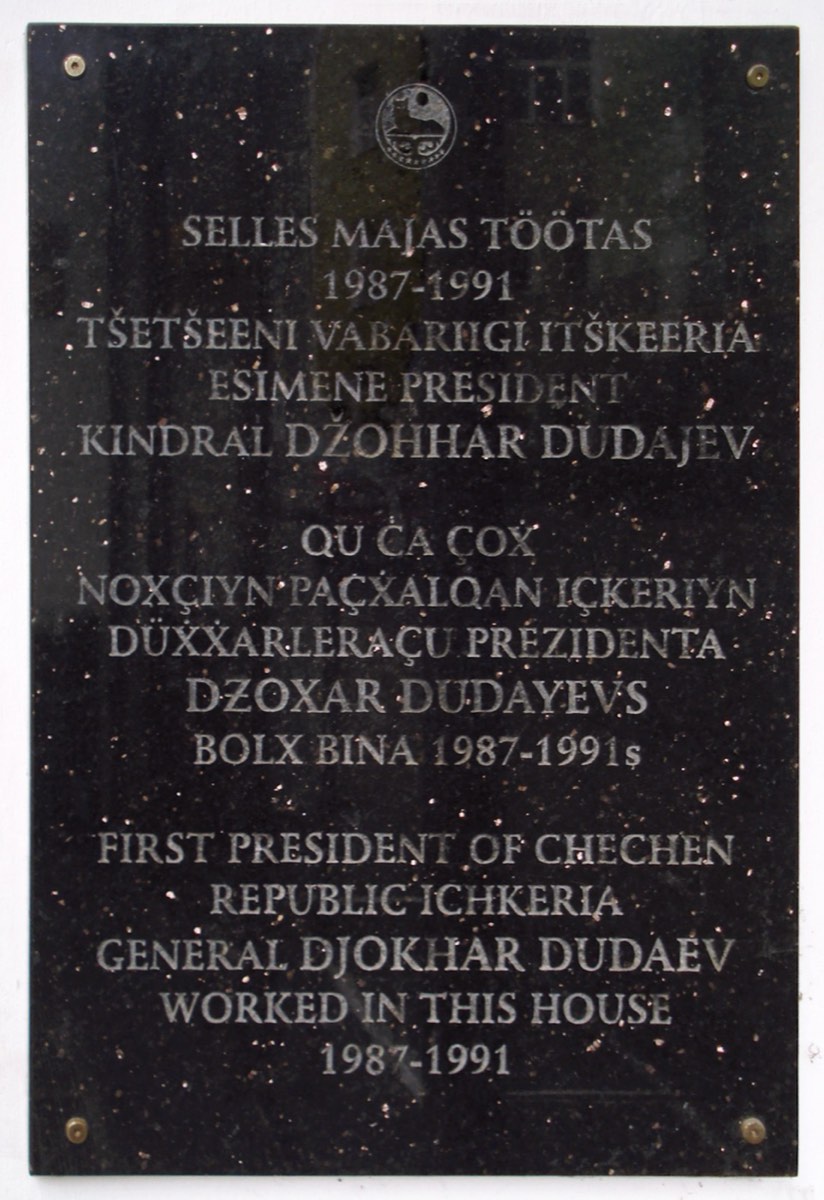
Who he was. A major general in the Soviet air force. From 1987 he commanded a heavy bomber division in Tartu, Estonia. On 20 July 1997 a plaque was unveiled on the building of the Barclay Hotel in Tartu: Dzhokhar Dudayev worked in this building in 1987–1991 (Postimees, 21 July 1997). In 1991 he was elected president of Chechnya, and Chechnya declared independence. In December 1994 Russia started a war.

What he said in 1995. The “Vzglyad” interview (full video, 1:29:27) can be dated from its content: he mentions the 50th anniversary of Victory Day and says the war has been going on “for half a year already”. So most likely May 1995; we did not find the exact broadcast date. The interviewer’s name cannot be heard in the recording. (Some YouTube titles claim that the interview was conducted by Vladislav Listyev — that is impossible, because Listyev was murdered on 1 March 1995.)
In the interview he describes what he calls a plan of the Russian General Staff: after Chechnya, the Caucasus, then Crimea, a corridor through Lithuania and Belarus to Kaliningrad, “in Latvia, two naval bases and seven land military bases” (1:19:09), and also a district in Estonia (which one cannot be clearly made out in the recording). And then a sentence that Ukrainian media were already quoting in 2017 (UNIAN, 6 August 2017): “There will yet be a slaughter in Crimea; Ukraine will yet clash with Russia as irreconcilable enemies. As long as Russism exists, it will never give up its ambitions.” (1:21:20)
He calls Russia a “racketeer” that “extorts money for itself with threats, tanks and armadas” (1:22:04), and says that Ukrainians “will never reconcile themselves to Russification” (0:06:55).
What came true and what did not. Crimea was annexed in 2014, and the full-scale war against Ukraine began in 2022. But by Dudayev’s own account the same “plan” ran roughly “to the end of 1995” (1:19:40) — and in 1995 it did not happen. On Latvia: Russian troops were to be withdrawn from Latvia by 31 August 1994 (treaty, Article 2), and by that day the troops had in practice been withdrawn; the last officers flew out that evening (LSM). In 1995 the only Russian military presence in Latvia was the Skrunda radar station — “a Russian military facility under civilian control”, without the status of a military base (Skrunda agreement). It was switched off on 31 August 1998 (OSCE). We found no source for the “seven bases”. He also said that parliamentarians of the Baltic states had recognised Russia’s aggression “de jure” (0:54:10). The Baltic Assembly resolution adopted in Riga on 22 April 1995 does indeed say that it “resolutely condemns aggression in Chechnya” and calls on Russia to halt the genocide of the Chechen people and to withdraw its army (resolution), but the words “de jure” do not appear in it.
The other side. In the same interview Dudayev uses hate speech about Russians as a people: “probably the only people on earth who believe in nothing at all, soulless, immoral” (0:03:16). He threatens: “we will fight until we burn — both Russia and Chechnya” (0:47:05) and “Russian cities will burn if they do not come to their senses” (0:52:41). Anyone who uses his “prophecies” must not stay silent about this.
Death. On 21 April 1996, near the village of Gekhi-Chu, Dudayev was killed by a missile fired from a Russian military aircraft while he was talking on a satellite phone (Kavkaz-uzel; Kommersant, 25 April 2026). We found no formal statement by the Russian state, although Russian media call this the “official version” — a special operation by federal forces. General Anatoly Kulikov, who commanded the joint federal forces in Chechnya from February to July 1995 and later became interior minister, cast doubt on the missile version in his memoirs (Rambler / Nizhegorodskaya Pravda, 29 May 2026).
And one more fact, which he refers to in the interview: starting on 23 February 1944, Stalin’s regime deported the entire Chechen and Ingush people within eight days — according to a report by the NKVD chief Beria, 478,479 people (historian Pavel Polyan, Novaya Gazeta). On 26 February 2004, in a recommendation to the Council, the European Parliament recognised the deportation of “the entire Chechen people” as genocide (P5_TA(2004)0121, paragraph 15).
Anna Politkovskaya (1958–2006): “Putin’s Russia”
Who she was. A journalist at Novaya Gazeta who for years wrote about the second Chechen war. Her book “Putin’s Russia” was first published in the United Kingdom in 2004 (Harvill Press, translated by Arch Tait). In Russian, the full text was published only by Novaya Gazeta on its website in October 2007, after her death (DW, 24 October 2007).
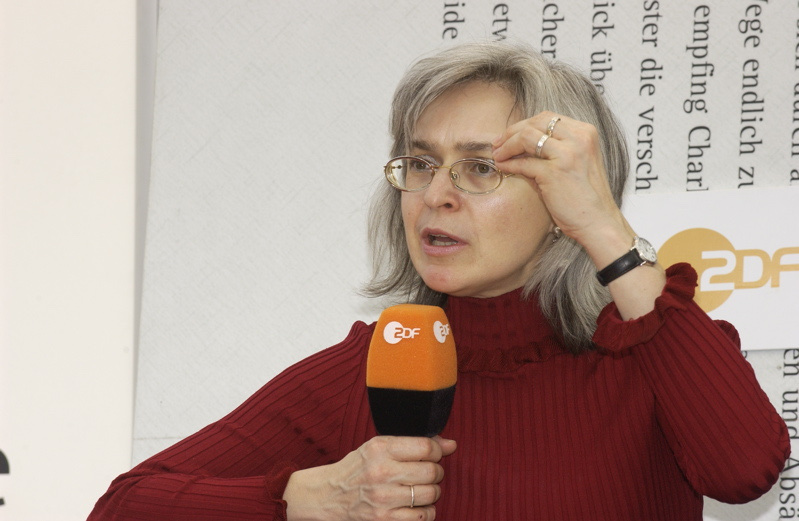

What she wrote. In the book’s preface: Putin, a product of “the grimmest of our domestic secret services”, “never managed, having been elected president, […] to kill the Soviet KGB lieutenant colonel within himself” and continues “settling scores with fellow citizens who are too freedom-loving” (Novaya Gazeta, 22 October 2007). At the end of the book, which she finished writing on 6 May 2004, the day before Putin’s second inauguration: “Why have I come to dislike Putin? This is why. For a simplicity that is worse than thieving. For the cynicism. For the racism. For the endless war. For the lies. […] For the corpses of the innocent dead that accompany his entire first term.” (Novaya Gazeta Europe, 12 May 2022)
Yet in the same text she blames not only Putin: “we are the ones responsible for everything that is happening. We, first of all — not Putin.” And in the preface she herself writes that the book is not an analysis but “emotional notes in the margins”.
September 2004. On her way to Beslan, on a flight to Rostov-on-Don, she drank a cup of tea and lost consciousness. In her piece for The Guardian she writes that a nurse at the hospital whispered to her: “they tried to poison you”, and that, according to the doctors, the tests taken at the airport had been destroyed on orders “from on high” (The Guardian, 9 September 2004). The next day Novaya Gazeta’s editor-in-chief Dmitry Muratov said that doctors had found she had been poisoned, but that the substance was not yet known (CPJ, 2 September 2004).
Death. On 7 October 2006 — Putin’s birthday — she was shot dead in the lift of her block of flats in Moscow (ECtHR judgment Mazepa and Others v. Russia, § 7). Five days later Novaya Gazeta published excerpts from two of her unfinished texts on torture in Chechnya (Novaya Gazeta, 12 October 2006).
Three days after the murder, speaking in Dresden, Putin said: “the degree of her influence on political life in Russia was extremely insignificant”. In the same answer he said that the murder does the authorities “far greater harm and damage than her publications” and that those responsible “must be found, exposed and punished” (kremlin.ru, 10 October 2006).
What was established. On 9 June 2014 the Moscow City Court sentenced the organiser, Lom-Ali Gaitukayev, and the gunman, Rustam Makhmudov, to life imprisonment, the former police officer Sergei Khadzhikurbanov to 20 years, and the brothers Dzhabrail and Ibragim Makhmudov to 14 and 12 years. The court found that the killing had been commissioned, for at least 150,000 US dollars, by an “unidentified person” who had been dissatisfied with her publications (ECtHR, § 37). The person who commissioned it has not been identified. On 7 October 2021 the statute of limitations expired (Novaya Gazeta).
In 2018 the European Court of Human Rights found, by five votes to two, that Russia had not seriously searched for the person who commissioned the killing: for years only one hypothesis had been examined, while the allegations of involvement by the FSB and the Chechen administration had not been examined. The court did, however, also acknowledge “tangible results” — the conviction of five people (ECtHR, §§ 75–78).
In November 2023 it became known that Khadzhikurbanov had been pardoned after fighting in Ukraine. His lawyer confirmed this (Meduza, 14 November 2023).
Boris Nemtsov (1959–2015): “Putin is war”
Who he was. A deputy prime minister under Yeltsin and later an opposition leader. Together with Vladimir Milov, and later with Leonid Martynyuk, he published independent reports on Putin’s rule: with Milov “Putin. The Results. 10 Years” (2010, putin-itogi.ru), with Martynyuk “The Life of a Galley Slave” (2012) on palaces, yachts and watches (putin-itogi.ru), and “Winter Olympics in the Subtropics” (2013), in which the authors estimated that about 25–30 billion dollars had been stolen in Sochi (putin-itogi.ru).
What he said in 2014–2015. On 29 August 2014 he wrote to Russian soldiers: “The war with Ukraine is a crime that has no statute of limitations. […] This is not your war. This is not our war. This is Putin’s war for his own power and money.” (Facebook, republished by Gordonua the same day). On 31 January 2015: “And the truth is that Putin is war and crisis.” (Facebook; quoted in the epigraph of the report “Putin. War”, PDF)
In February 2015 the magazine Sobesednik published an interview headlined “I am afraid that Putin will kill me”. This headline is often quoted as Nemtsov’s own sentence, but he did not say it in those words. In the interview he says that this is what his mother says: “He will kill you!” Asked whether he himself is afraid, he replies: “You know, yes… A little. Not as much as Mum.” (republished by censor.net, 28 February 2015; the original on sobesednik.ru is not accessible from abroad).
A few hours before his death, at around eight in the evening on 27 February 2015, he was on air on Echo of Moscow radio: “Putin has started an insane, aggressive policy of war against Ukraine, deadly for our country and for many citizens.” And: “Putin is a specialist in lying, he is a pathological liar.” (transcript, echofm.online)
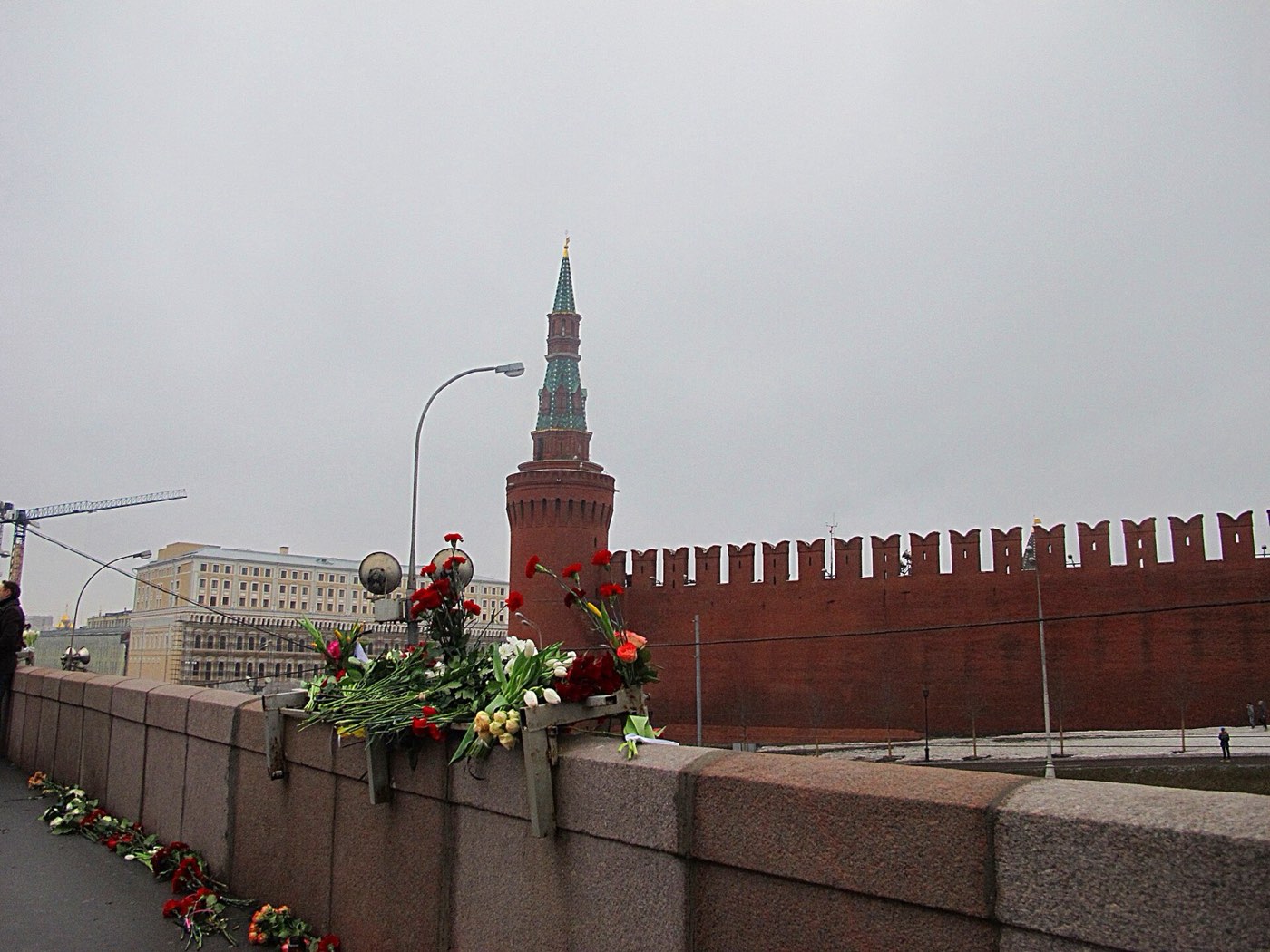
Death. About three and a half hours later, at around 23:30, he was shot dead with six shots on the Bolshoy Moskvoretsky Bridge “in the immediate vicinity of the Kremlin” (ECtHR, Nemtsova v. Russia, §§ 6–7). That same night the Kremlin press secretary Dmitry Peskov relayed Putin’s assessment: the murder “has all the hallmarks of a contract killing and is of an extremely provocative nature” (Meduza, 28 February 2015).

The report he had started was completed by his associates. “Putin. War” was presented in Moscow on 12 May 2015. It documents Russian soldiers in Donbas: in the summer of 2014, including after the fighting at Ilovaisk, by the most conservative estimate “no fewer than 150 coffins” returned to Russia, and the number of soldiers grew “from 3–5 to 8–10 thousand” (report PDF). These are the authors’ estimates, not official figures.
What was established. On 13 July 2017 the court sentenced the gunman, Zaur Dadayev, to 20 years and four other accomplices to between 11 and 19 years (Meduza, 13 July 2017). The investigators named Ruslan Mukhudinov, a former officer of the Sever battalion, as having commissioned and organised the killing “together with other unidentified persons” (ECtHR, § 73); he is on the international wanted list and has not been tried. Who else paid for the killing, and why, has not been established. The investigators themselves rejected the theory that the killers had taken revenge for Nemtsov’s support for Charlie Hebdo, because the preparations had begun as early as September 2014; the official motive is “in return for a reward” (ECtHR, § 79).
In 2022 Bellingcat, The Insider and the BBC revealed that an FSB team had followed Nemtsov on at least 13 trips between May 2014 and February 2015 (BBC). Whether this team was linked to the killers has not been proven. The Insider writes that the question “is still open”, although it believes that the team’s switch to another opposition figure, Vladimir Kara-Murza, two days before the murder suggests that the FSB knew about it (The Insider). Peskov to the BBC: “It looks like another fabrication” (BBC).
On 11 July 2023 the European Court of Human Rights unanimously found that Russia had not effectively investigated who commissioned the killing and had not meaningfully examined the political motive: the investigators initially considered it but discarded it without giving any reasons. The allegations by Nemtsov’s daughter that the killing was politically motivated and that state officials could have been involved were, in the court’s words, “not at all implausible” (ECtHR, §§ 116, 118, 125).
Alexei Navalny (1976–2024): “Don’t give up”
Who he was. A lawyer and anti-corruption campaigner whose Anti-Corruption Foundation (FBK) investigated Putin’s circle. His video “A Palace for Putin” (19 January 2021) has so far been viewed more than 138 million times on YouTube (YouTube, viewed 26 October 2026).
He, too, was not free of imperial reflexes. In 2014, asked whether as president he would try to return Crimea to Ukraine, he replied: “What is Crimea, a sausage sandwich or something, to be handed back and forth?” In his previous answer he had said that Crimea had been seized “in flagrant violation of all international norms” but would remain part of Russia, and he then proposed a “normal referendum” (Echo of Moscow, 15 October 2014, archive). In the same interview he called integration a “natural process”, but said that “you can’t just annex Ukraine now, and Belarus, the Baltics and Kazakhstan along with it”, because “it’s a utopia, it’s nonsense”. In 2008, on the first day of the Russia–Georgia war, he demanded that all Georgian citizens be expelled from Russia (his blog, 8 August 2008). In 2021 Amnesty International wrote that his statements of 2007–2008 “may have constituted advocacy of hatred”, and in the same statement re-designated him a prisoner of conscience (amnesty.org). In February 2023, already in prison, he wrote that Ukraine’s borders are “the same as Russia’s — internationally recognised, defined in 1991. […] There is nothing to discuss here.” (navalny.com, 20 February 2023)
August 2020. On 20 August he fell ill on a flight from Tomsk. On 2 September the German government announced that a Bundeswehr laboratory had found a nerve agent from the Novichok group (Bundesregierung, 2 September 2020); on 14 September it announced that French and Swedish laboratories had confirmed this (Bundesregierung, 14 September 2020). The Organisation for the Prohibition of Chemical Weapons (OPCW) confirmed a cholinesterase inhibitor structurally similar to the chemicals in schedules 1.A.14 and 1.A.15 of the convention; these are usually referred to as the Novichok group, but the OPCW itself does not use the name (OPCW S/1906/2020). Putin on 17 December: “Who needs him? If they had wanted to, they would probably have finished the job.” (kremlin.ru)
February 2021. After his return to Russia and his arrest, he told the court on 2 February that Putin would go down in history as a poisoner: “There was Alexander the Liberator, or Yaroslav the Wise, and we will have Vladimir the Underpants Poisoner.” (navalny.com) This refers to a December conversation in which the FSB officer Konstantin Kudryavtsev, not knowing whom he was talking to, told Navalny that he had been ordered to clean Navalny’s underpants, especially the inside; from this The Insider concludes that the poison had been there (The Insider). That day the court replaced his suspended sentence of three and a half years from 2014 with a custodial sentence. Later came 9 years (2022) and 19 years in a special-regime penal colony (2023).
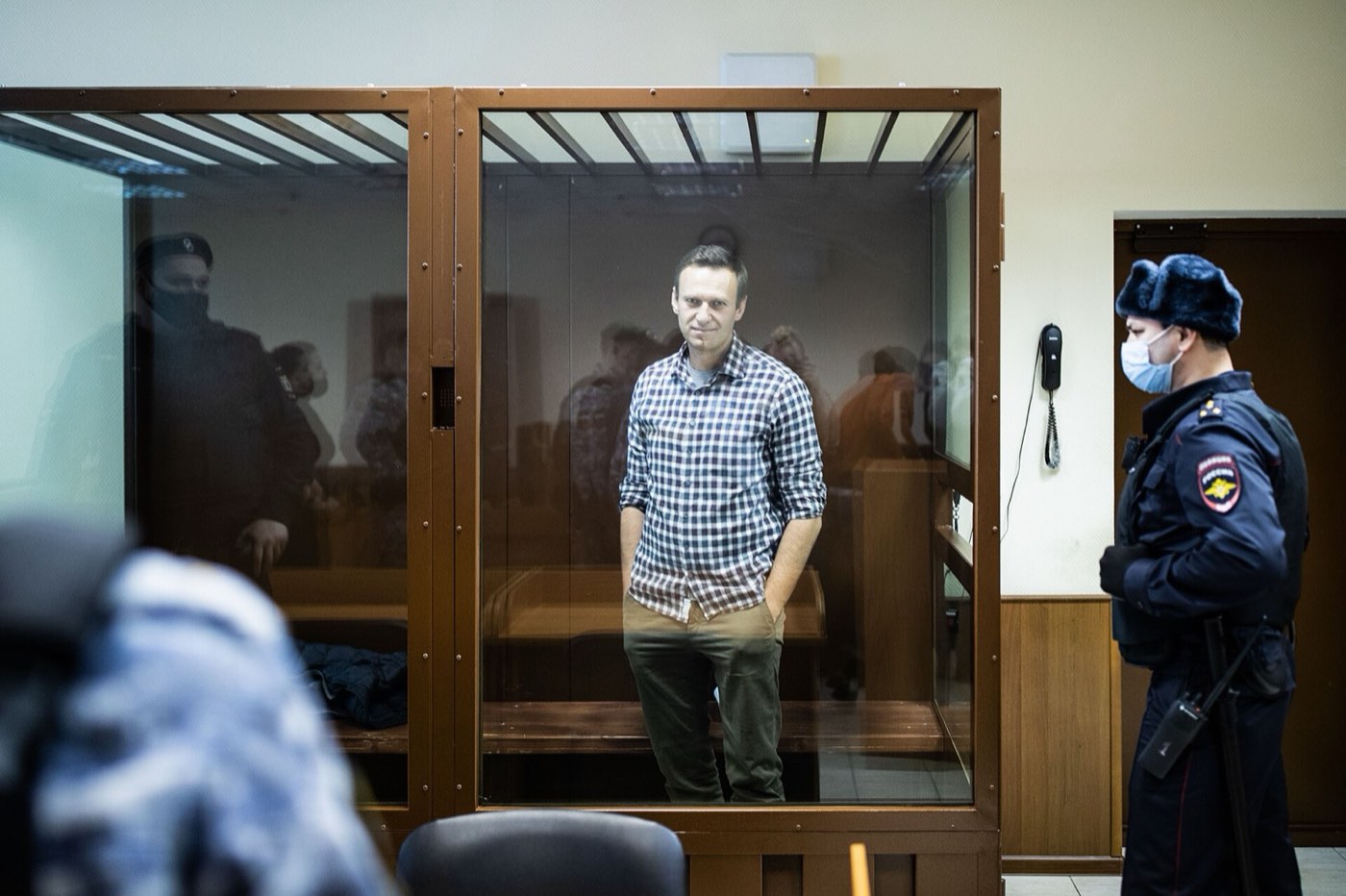

In the documentary film “Navalny” (2022) the director asks him what message he would leave if he were killed. He answers first in English, then in Russian (our translation of the Russian part): “Don’t give up, you mustn’t, you can’t give up. If this has happened, it means that we are unusually strong at this moment, since they decided to kill me.” (film clip, Madman Films, 16 February 2024)
Death. On 16 February 2024 the prison service of the Yamal-Nenets region announced that he had died in penal colony IK-3 in Kharp, beyond the Arctic Circle: he had “felt unwell after a walk”, and “the causes of death are being established” (FSIN, archived copy). Russia’s Investigative Committee later refused to open a criminal case and gave the cause of death as a “combined illness” (Meduza, 15 August 2024).
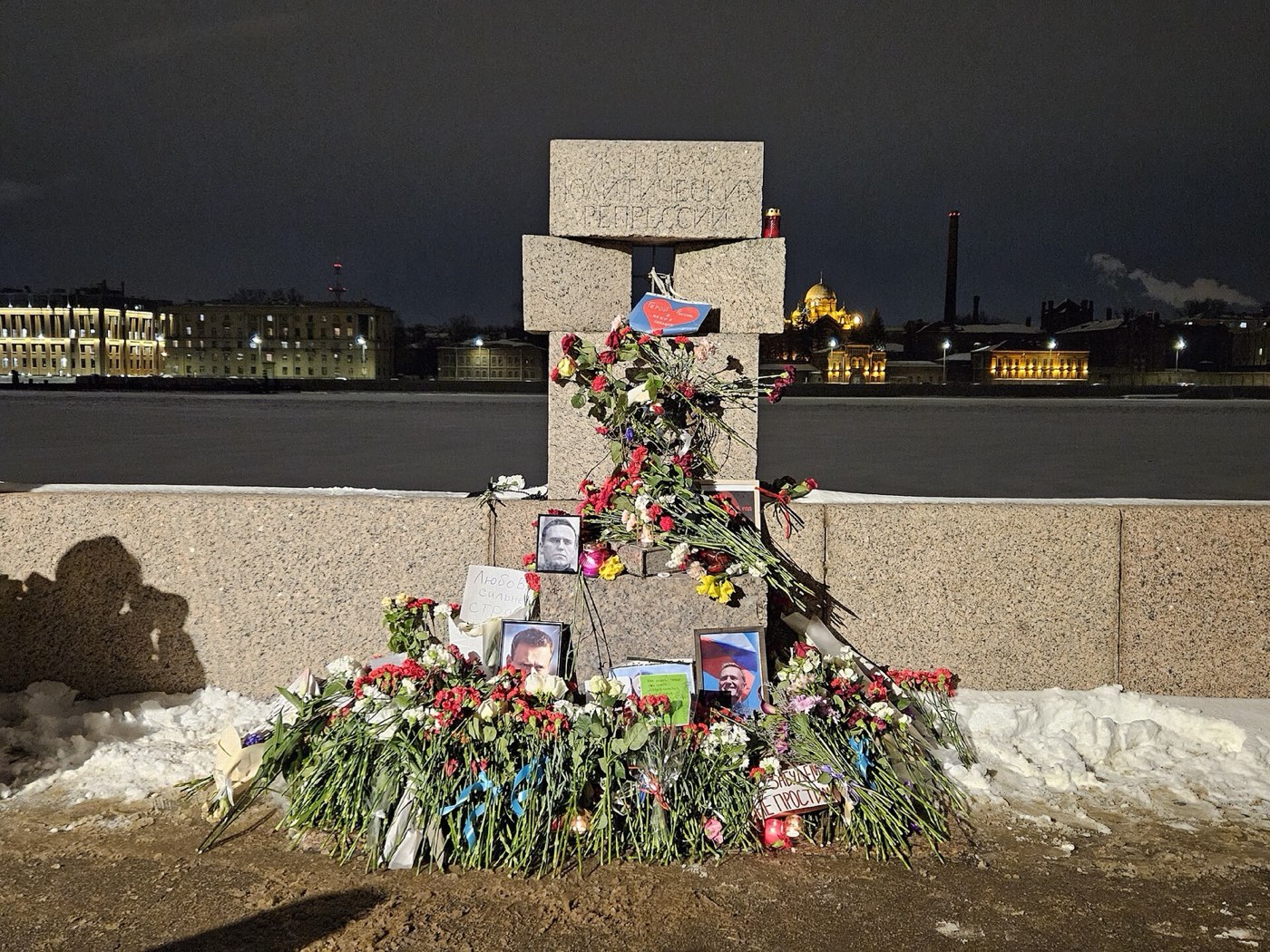

On 14 February 2026 the United Kingdom, Sweden, France, Germany and the Netherlands stated jointly that analyses of samples had “conclusively confirmed the presence of epibatidine” — a toxin found in South American poison dart frogs that does not occur naturally in Russia (it can also be synthesised). “Poisoning was highly likely the cause of his death”; Russia had “the means, motive and opportunity” (French Foreign Ministry). In July 2026 the EU sanctioned six Russian scientists linked to epibatidine (Council of the EU, 3 July 2026). Kremlin press secretary Peskov called the accusations “biased and not based on anything” (NG Europe, 16 February 2026).
The other side. In April 2024 The Wall Street Journal reported that US intelligence agencies believe Putin “likely didn’t order” the death at that particular moment. The same assessment, however, “doesn’t dispute Putin’s culpability” (WSJ text, republished by To Vima).
The court. The judgment of the European Court of Human Rights in Navalnyy v. Russia (No. 4) (3 February 2026) is not a judgment on the cause of death. It finds that his detention was unlawful, that the authorities knew or ought to have known of a real risk to his life and failed to assess it, that 39 days of arbitrary sleep deprivation and the shaving of his head without legal basis together amounted to inhuman and degrading treatment, and that Russia failed to comply with the court’s order to release him (ECtHR). As early as 2018 the Grand Chamber of the ECtHR had found that the purpose of two of his arrests was “to suppress that political pluralism” (ECtHR, § 175).
A pattern, not an exception
These four are not alone. Below is part of the list of people killed or who died in suspicious circumstances under Putin’s rule, divided according to how much has been proven.
| Level | What it means | Examples |
|---|---|---|
| A | A court or official inquiry has found that the Russian state was responsible | Alexander Litvinenko (London, 2006, polonium — UK public inquiry: the operation was “probably approved by Mr Patrushev and also by President Putin”); Zelimkhan Khangoshvili (Berlin, 2019 — court: ordered by a Russian state body); Dawn Sturgess (Salisbury, 2018, Novichok — UK public inquiry: the operation to assassinate Sergei Skripal “must have been authorised at the highest level, by President Putin”) |
| B | The perpetrators have been convicted; the person who commissioned the killing has not | Anna Politkovskaya (2006), Boris Nemtsov (2015), Igor Domnikov (2000; the accused mastermind, a former deputy governor of the Lipetsk region, was not convicted because the statute of limitations had expired) |
| C | There are only suspicions, with no court finding | Yevgeny Prigozhin (2023), Natalia Estemirova (2009), Yuri Shchekochikhin (2003) |
Of the cases mentioned here, official findings name Putin only in the two British inquiries, into the deaths of Litvinenko and Sturgess, and even there with “probably” or “must have been authorised”. The Berlin court speaks of a Russian state body without naming Putin. About Politkovskaya and Nemtsov it can fairly be said: they were killed, the person who commissioned the killing has not been tried, and the European Court of Human Rights has found that Russia did not seriously look for that person. About Navalny: he died in a Russian prison; five European governments believe he was poisoned.
Is the empire really collapsing?
There were warnings before 1991 too. In 1969 the Soviet dissident Andrei Amalrik wrote the essay “Will the Soviet Union Survive Until 1984?”: “I have no doubt that this great East Slavic empire […] has entered the last decades of its existence.” (text, Antologiya samizdata) He guessed the outcome but not the route: he predicted the fall of the regime “between 1980 and 1985” after a war with China, which did not happen. In 1970 he was arrested for his writings and interviews. In 1999 the CIA’s own historians wrote that the estimates “predicted the impending implosion of the Soviet system” and that they “often accurately anticipated an event or development but misjudged the time it would take for it to materialize” (CIA, At Cold War’s End).
Those who believe the Russian Federation may collapse. The analyst Janusz Bugajski (Jamestown Foundation) writes in his book “Failed State” (2022) that the break-up of the Russian Federation will be “the third phase of imperial collapse” after the Eastern bloc and the USSR (Atlantic Council, 8 September 2022) and that Putin, who came to power to prevent Russia’s disintegration, “may be remembered as precipitating the country’s demise” (Jamestown, 1 August 2022).
Those who do not believe it. Nikolay Petrov (guest report for the Stockholm Centre for Eastern European Studies, SCEEUS, 2023): “there are no objective or subjective prospects for the country’s disintegration in either the present or the foreseeable future” — although he adds that Russian territory could “fragment from its edges”, particularly in the Caucasus (SCEEUS). The opposition politician Vladimir Milov, who co-wrote reports with Nemtsov: the subject is “completely unrealistic”, and there are no conditions for Russia’s disintegration into separate states (LibMod, 31 August 2023). James Nixey, former director of the Russia and Eurasia Programme at Chatham House (2026): no economic collapse should be expected in the near term; what is happening is Russia’s “longer-term decomposition and managed decline” (SCEEUS, 20 February 2026). William Dixon (RUSI) and Maksym Beznosiuk on the Atlantic Council blog (2026): there is little to indicate that Russia is about to repeat 1917 or 1991, but “the end could come suddenly” (Atlantic Council, 9 February 2026).
Some figures. In the 2021 census, 80.85% of those who stated their ethnicity identified as Russian — but only 71.73% of the total population, because 11.27% did not state their ethnicity (our calculation based on the Rosstat table; the census also covered annexed Crimea). By 23 October 2026 the independent outlet Mediazona, together with the BBC, had identified by name 282,993 Russian soldiers killed in the war against Ukraine — this is a minimum, not the full number (Mediazona).
What the Kremlin says. In 2005 Putin called the collapse of the USSR “the greatest geopolitical catastrophe of the century” (kremlin.ru, 25 April 2005). In 2021 he wrote that “Russians and Ukrainians are one people” (kremlin.ru, 12 July 2021). On 21 September 2022, announcing mobilisation, he said that the West wants Russia to “break up into a multitude of regions and areas mortally hostile to one another” (kremlin.ru). The Kremlin itself uses talk of collapse to mobilise.
What can be said with certainty
- All four publicly and on the record linked those in power in Russia with war and lies. In 1995 Dudayev spoke of a slaughter in Crimea and a war with Ukraine, which came in 2014 and 2022, but also of things that did not happen. Nemtsov began gathering evidence of Russian soldiers in Ukraine as early as 2014; after his death his associates completed the report in May 2015.
- Dudayev was killed in an operation by Russian federal forces, according to the most widespread version by a missile strike. Politkovskaya and Nemtsov were shot; the perpetrators have been convicted, those who commissioned the killings have not been tried. Navalny died in a Russian prison; five European governments are convinced that he was poisoned.
- Most of the analysts quoted here see no signs that the Russian Federation will collapse in the near future (the exception is Bugajski). Nor did any of those quoted here accurately predict the timing and manner of the 1991 collapse.
- Russia has not fulfilled the second part of Dudayev’s 1995 formula — a state that “respects laws and rights”. According to the European Court of Human Rights, those who commissioned the killings of Politkovskaya and Nemtsov have not been seriously sought, and the Investigative Committee refused to open a criminal case into Navalny’s death.
Quotes in the original language
- Dudayev (transcribed from the recording): «…также должна исчезнуть и российская империя» (1:12:08); «Россия сегодня — это Карфаген, который должен быть разрушен, или он должен стать демократически правовым государством, пусть не демократии там и не пахнет, по крайней мере соблюдающие законы и права, или это государство должно исчезнуть с карты истории. Средины нет» (1:13:56); «в Крыму ещё будет бойня, Украина ещё схлестнётся с Россией на непримиримых. Пока русизм существует, он никогда не откажется от своих амбиций» (1:21:20; YouTube subtitles have «бой не» and «расизм»); «в Латвии две военно-морские базы и семь наземных военных баз» (1:19:09); «вот примерно планы до конца девяносто пятого года» (1:19:40); «Россия по сути дела рэкетир» (1:22:04); «будем драться пока не сгорим и Россия и Чечня» (0:47:05); «будут гореть российские города, если они не опомнятся» (0:52:41).
- Politkovskaya: «так и не смог, избравшись президентом, стать выше, то есть убить в себе советского подполковника КГБ»; «За что я невзлюбила Путина? Вот за это и невзлюбила. За простоту, которая хуже воровства. За цинизм. За расизм. За бесконечную войну. За ложь. За газ в «Норд-Осте». За трупы невинно убиенных, сопровождающие весь его первый срок»; «ответственны за все происходящее — мы. Мы прежде всего — не Путин».
- Putin, 10 October 2006: «степень ее влияния на политическую жизнь в России была крайне незначительной»; «гораздо больший урон и ущерб, чем ее публикации»; «Они должны быть найдены, изобличены и наказаны».
- Nemtsov: «Война с Украиной – преступление, у которого нет срока давности. […] Это не ваша война. Это не наша война. Это война Путина за свою власть и деньги» (29 August 2014); «А правда в том, что Путин — это война и кризис» (31 January 2015); «Вы знаете, да... Немного. Не так сильно, как мама» (Sobesednik); «Путин начал безумную агрессивную, смертоносную для нашей страны и для многих граждан, политику войны с Украиной» (27 February 2015); «Путин специалист по вранью, он патологический лжец» (27 February 2015).
- Putin (via Peskov), on the night of 27–28 February 2015: «имеет все признаки заказного и носит исключительно провокационный характер».
- Navalny: «Крым – это бутерброд с колбасой, что ли, чтобы его туда-сюда возвращать?», «с вопиющим нарушением всех международных норм», «Интеграция – естественный процесс. Но нельзя сейчас просто присоединить к себе Украину, заодно Белоруссию, Прибалтику, Казахстан. […] это утопия, это бред» (15 October 2014); «Какие границы у Украины? Такие же, как и у России, — международно признанные, определенные в 1991 году. […] Тут нечего обсуждать» (20 February 2023); «был Александр Освободитель или Ярослав Мудрый, и будет у нас Владимир Отравитель Трусов» (2 February 2021); «Здесь у меня просто очевидная вещь, ну не сдавайтесь, не надо, нельзя сдаваться. Если это произошло, это означает, что мы необыкновенно сильны в этот момент, раз они решили меня убить» (film “Navalny”, 2022).
- Peskov, 16 February 2026: «предвзятыми и ни на чем не основанными».
- Putin, 17 December 2020: «Кому он нужен-то? Если бы уж хотели, наверное, довели бы до конца».
- Putin, 25 April 2005: «крушение Советского Союза было крупнейшей геополитической катастрофой века».
Editor's note
- Quotes from Russian are our own translations; the originals are in the section “Quotes in the original language”. Omissions are marked […].
- Quotes from Dzhokhar Dudayev's 1995 interview were transcribed from the video recording; time stamps link to the place in the recording. The broadcast date is not known and was inferred from the content.
- Court judgments, government statements and sanctions decisions are quoted from the original documents. Where a media report or an archived copy was used, this is stated at the link.
- We did not ask the people and institutions named in this article for comment before publication. The Kremlin's position is quoted from its public statements.
Change log
- 26 October 2026. Published.